Home01 Building02 Consulting03 About04 Contact05
305-537-6105  ·  info@clouddesignbuild.com

Everything you need to know before you build here.

Cost, permitting, flood zones, and hurricane codes - the real numbers and the real process, from a design-build builder who works this market every day.
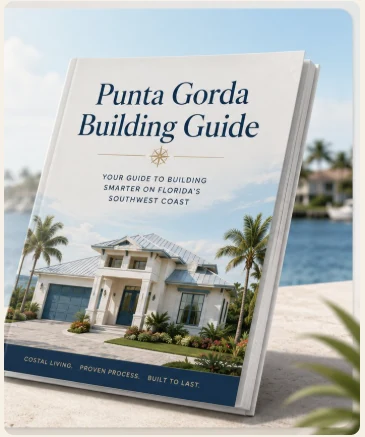
The Punta Gorda Building Guide by Cloud Design Build - cover showing a coastal custom home on the water

At a glance

What you need to know, up front.

  • Custom home costs here start around $270/sq ft and can reach $400/sq ft, depending on size, materials, elevation, seawalls, pools, and docks.
  • Permitting runs 2 to 4 weeks per review pass, often more than one round. The full design-to-permit sequence can pass 12 months.
  • Two building departments cover this market - City of Punta Gorda or Charlotte County - depending on your exact lot.
  • Much of the area sits in flood zone AE, with Base Flood Elevations of 8 to 14 ft.
  • Not in Florida's High Velocity Hurricane Zone, but in the Wind-Borne Debris Region - new construction needs impact windows or approved shutters. We build to the stricter Miami-Dade standard anyway.

Cost to build

Cost to build a home in Punta Gorda.

Custom home costs in the Punta Gorda area start around $270 per square foot and can easily reach $400 per square foot, depending on size, materials, elevation requirements, and site-specific factors like soil conditions, seawalls, pools, and docks. A waterfront lot with a dock and a pool lands in a different range than an inland lot of the same square footage, since elevation and site work change the foundation and drainage requirements before construction even starts.

There's no single number that fits every project - that's true whether you're building on your own lot or from one of our collections. The most accurate way to budget is a conversation about your specific lot and plans, early, before design gets ahead of the numbers.
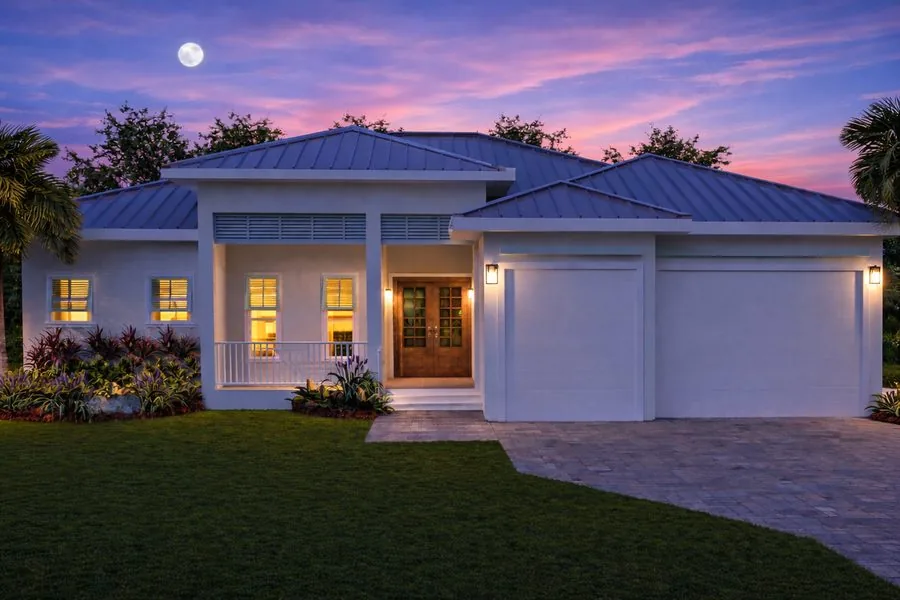
Cloud Design Build custom home at dusk with a standing-seam metal roof and three-car garage in Southwest Florida

Permitting

Getting approved to build in Punta Gorda.

Permitting here happens in more than one step, and skipping one can hold up your whole project.

Step 01

Your HOA, if you have one

In deed-restricted communities like Burnt Store Lakes, the architectural review committee has to approve your plans before the county will even accept your permit application - the county requires a signed HOA approval as part of the submittal. This step happens first, not alongside permitting. Requirements and turnaround vary by community, so we confirm what your specific HOA requires before we submit.

Step 02

The right building department

"Punta Gorda" covers two different jurisdictions, and which one governs your permit depends on your exact lot, not your mailing address.

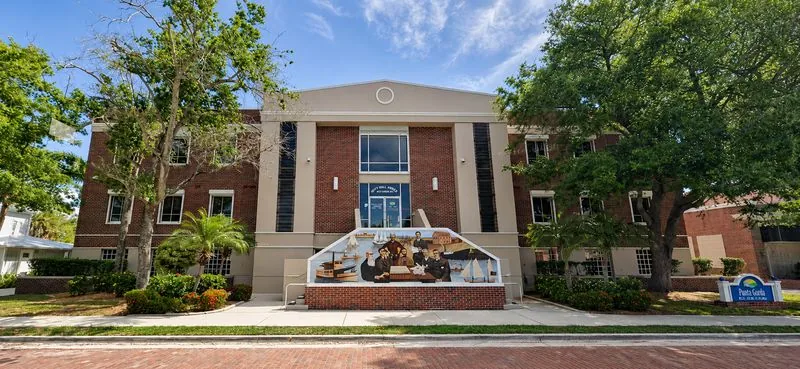
City of Punta Gorda City Hall Annex, home of the city Building Division on Harvey Street
Inside city limits

City of Punta Gorda

Governs land inside official city limits. Building Division, 2nd floor of City Hall Annex, 126 Harvey St. Enforces the Florida Building Code, 8th Edition (2023).
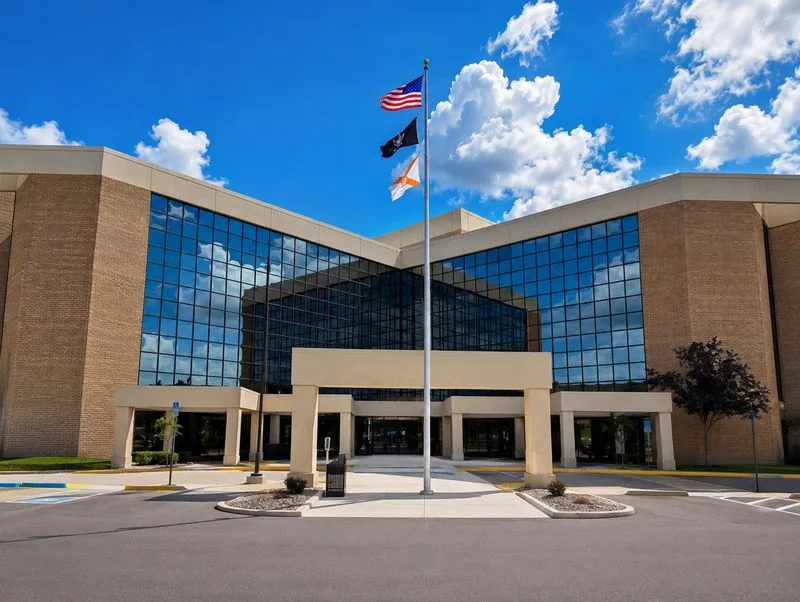
Charlotte County Community Development building on Murdock Circle, Port Charlotte, Florida
Unincorporated area

Charlotte County

Governs the unincorporated area, including Burnt Store Lakes and most of our current projects. Community Development Department, Murdock Circle, Port Charlotte. Same Florida Building Code, 8th Edition (2023).

Most Cloud Design Build projects, including Cape Horn in Burnt Store Lakes, fall under the county rather than the city. We navigate both.

Step 03

How long it actually takes

You may see a "48-hour" review time quoted for the city. That's the turnaround for one review pass, not your total time to a permit in hand.

A single review pass typically runs 2 to 4 weeks, depending on workload, timing, and how much is involved in your project. It's common to get corrections back and need to resubmit at least once, so plan for more than one review cycle before your permit is actually in hand.

Zoomed out, the full sequence is design, then HOA approval where required, then the building department. Depending on whether you're adjusting one of our existing floor plans or designing something fully custom, and how many review rounds it takes, that pre-construction phase alone can run past 12 months before ground is even broken.

Flood zones

Building in a flood zone in Florida, done right.

Much of Charlotte County sits in an AE flood zone, with Base Flood Elevations typically running 8 to 14 feet. That number determines how high your home's lowest floor has to sit, and it directly affects your flood insurance premium. The costly surprises almost never come from the floor plan - they come from falling in love with a lot before understanding what its flood zone actually requires.

Two elevation certificates are required during construction, not one: an "under construction" certificate before the lintel is poured, so any problem gets caught early, and a "final" certificate before your last inspection, which is what your insurer uses to set your rate.

Before you buy, you can look up any lot's flood zone and Base Flood Elevation yourself: FEMA's Flood Map Service Center, Charlotte County's flood information page, and the City of Punta Gorda's flood readiness page all publish this directly.
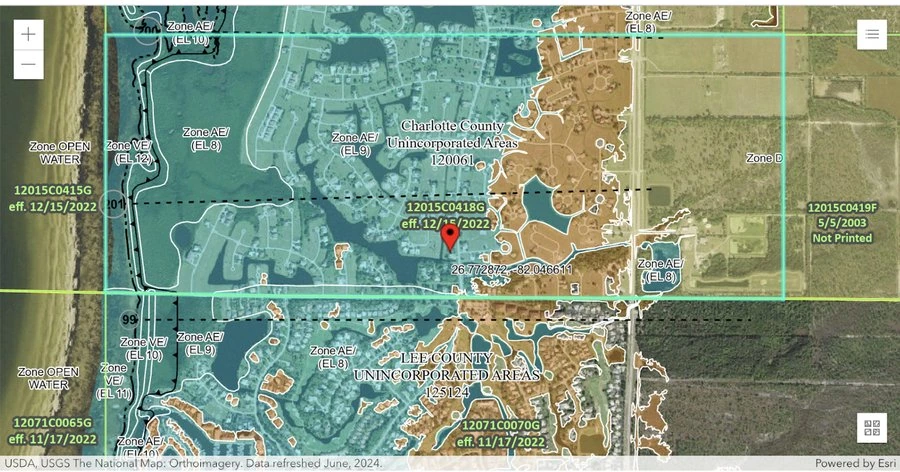
FEMA flood zone map covering part of Burnt Store Lakes, showing zone AE with base flood elevations of 8 to 10 feet alongside zone VE and open water
Example FEMA flood zone map for part of Burnt Store Lakes - zones and elevations vary lot by lot.
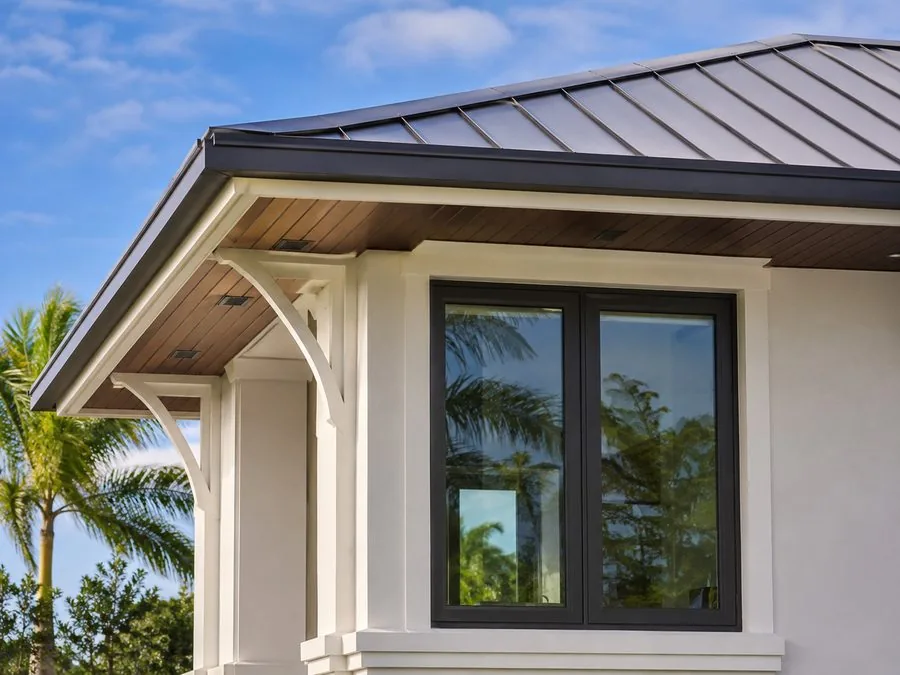
Impact-rated windows and a commercial-grade standing-seam aluminum roof on a Cloud Design Build home
Built past codeMiami-Dade rated products · PGT impact windows · aluminum roof

Hurricane-resistant construction

Hurricane-resistant construction, built for Florida.

Punta Gorda isn't in Florida's High Velocity Hurricane Zone, but it is in the Wind-Borne Debris Region, and we build past what's required either way: products rated to Miami-Dade County's HVHZ standard, PGT impact windows, and a commercial-grade aluminum roof, engineered for this region's wind loads from the start.

How we build hurricane-resistant homes covers the wall construction, load path, and wind mitigation side of this in full.

Relocating

Building from out of state, or remotely.

Most of our clients are planning this move from somewhere else entirely, not from a lot they can drive by on a Saturday. Punta Gorda's part of the draw - a small Gulf Coast city on Charlotte Harbor with real boating and fishing access, a walkable downtown, and a slower pace than the bigger coastal markets nearby. But that distance is exactly why the building process has to be built around remote decision-making from day one, not treated as an inconvenience to work around.

In practice: design happens through our virtual Design Studio, where you choose finishes and review 3D walkthroughs from anywhere. Permitting - including HOA approval where it applies, and figuring out whether your lot falls under the city or the county - is handled on our end, not yours. During construction you get regular photo and video updates, so you're not flying blind between visits, and you come down for the milestones that actually matter rather than every site walk.

The things that trip up long-distance buyers most in this specific market are the ones covered earlier in this guide: not knowing which building department actually governs their lot, not knowing a lot's flood zone before they've already fallen for it, and underestimating hurricane risk because it wasn't part of daily life back home. Working with a builder who's local to Punta Gorda closes those gaps before they become expensive surprises.

One thing worth doing no matter who you build with: bring in an independent inspector at key construction milestones, not just at the end. It's a small cost that protects you, and any builder confident in their work should welcome it.

For many clients, the move makes sense beyond the home itself, too - Florida has no state income tax, which is part of why so many people relocating here are building rather than settling for whatever's already on the market.

Around town

A few of James's own favorites.

Since a builder who actually lives here can point you somewhere better than a review site can: Elena's Restaurant for classic old-school diner breakfast, or John Ski's House of Breakfast & Lunch if you want something with a bit more flair. Carmelo's Italian Ristorante downtown for dinner, and Cass Cay Restaurant & Bar at Burnt Store Marina for waterfront seafood - right next door to Burnt Store Lakes, along with the golf course there. Laishley Crab House is another favorite on the water, and an evening walking, shopping, and getting ice cream at Fishermen's Village is still one of the best ways to spend a night here.
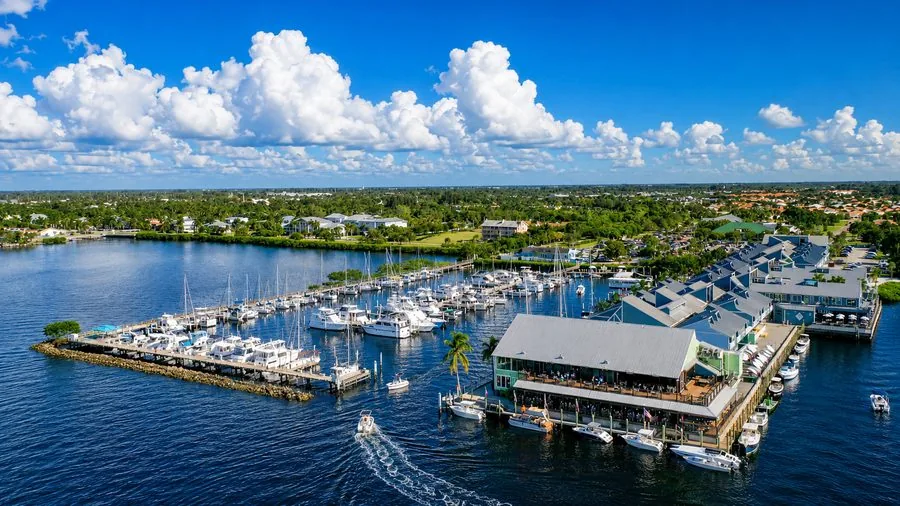
Aerial view of Fishermen's Village waterfront marina, shops and restaurants in Punta Gorda, Florida
Fishermen's VillageMarina · shops · waterfront dining

Questions

Building in Punta Gorda, answered.

If you're building in a deed-restricted community, likely yes - Burnt Store Lakes, for example, requires architectural committee approval before the county will accept your permit. Requirements vary by community, so we confirm this early for your specific lot.
It depends most on your starting point - adjusting finishes on one of our existing collections moves faster than a fully custom design from scratch. Either way, design comes first, then HOA approval where required, then the building department, and that pre-construction sequence alone can run past 12 months. Construction adds additional time after the permit is issued.
Florida code here lets you satisfy the requirement with either impact-rated windows or approved hurricane shutters - shutters are the cheaper option, but they mean putting them up before every storm. Impact windows cost more upfront but typically lower insurance premiums and remove that step entirely, which is why we build with them as standard.
A production home is built from a limited set of shared plans repeated across a subdivision. A custom home is designed around your lot, your lifestyle, and your budget from the first drawing - which is what every Cloud Design Build home is, whether it's on your own lot or from one of our collections.
A design-build builder handles design and construction under one roof, instead of you hiring a separate architect and then a separate contractor and hoping they agree with each other. Cloud Design Build is a design-build company for exactly that reason - one team, one point of accountability, from the first drawing to the final walkthrough.
If you already own land in Punta Gorda or Burnt Store Lakes, we design and build a custom home tailored to that specific site rather than fitting you into a pre-set plan. We handle the HOA approval where required and the permitting for your lot's jurisdiction, the same as we would for one of our own presale homes. See our building page for how build-on-your-lot works.
Yes - a building permit is required for new construction anywhere in Punta Gorda or Charlotte County, along with HOA approval first if your community requires it. We handle the application and the back-and-forth with whichever building department governs your lot.
Look for licensing depth (not just a General Contractor license, but the trade licenses and inspection credentials behind it), a design-build structure so design and construction don't get handed off between separate companies, and local experience with this area's flood zones, HOAs, and permitting - not just a portfolio of renderings.
Cost tracks closely with square footage, but not all square footage is equal. Conditioned living space, covered outdoor areas like a lanai or porch, and the garage all price differently per square foot. What matters most for your budget is how much true living space you have and how the rest is built, not just the total footprint.
Sometimes, depending on what changes. Small things like railing style or light fixtures make a small difference. What really moves the number is square footage, the amount of glass (especially impact glass here in Florida), roof complexity, and structural elements like elevated concrete decks. We'll walk you through which changes actually move the cost and which are minor.
The lot itself can add real cost before the house even starts. Fill, a stemwall, your flood zone and required elevation, drainage, and utility runs all vary by property. A price per square foot for the house alone doesn't include what your specific lot requires to build on it safely and to code, so site costs are always part of the real budget conversation.
Yes, in both directions. More complex rooflines with multiple gables cost more to frame and detail, and roof type also matters for storms and insurance - certain designs hold up better in Florida's high winds and can earn better insurance rates. We're glad to walk through the tradeoffs, and often recommend talking with an insurance broker before finalizing.
It depends, and it's worth comparing carefully rather than assuming. An existing home can look less expensive on the sticker, but older homes often need real investment that isn't in the purchase price - a new roof, impact windows, updated HVAC, kitchen and bath updates, and sometimes higher insurance on older construction. Once you add those in, the gap between buying an older home and building new can be smaller than it first appears, and building gets you exactly what you want, built to current code and under warranty.
Insurance is a cost people often overlook when comparing an existing home to building new. Older homes can run higher on property and flood insurance for a few reasons: a lower built elevation than current requirements, and materials or construction that are outdated or no longer to code. A newer home built to today's standards, at the proper elevation with current roofing and impact protection, will often qualify for better rates - it's worth getting quotes on both before comparing the real cost of buying versus building.
We usually don't recommend it. The upfront savings on fixtures and countertops are smaller than most people expect, and upgrading later means paying to remove what you just installed, then paying again for what you actually wanted - often more than double the cost of doing it once. Some things should never be phased at all, like waterproofing, the slab, framing, roof, impact windows, and plumbing and electrical rough-ins, since reworking anything structural means opening the house back up.
We're not a lender, but we can point you toward people who handle construction financing regularly and can walk you through your options. Financing a build works differently than a standard mortgage, so it helps to talk with someone who does it early in the process.
Most of Burnt Store Lakes came through recent storms well. There's one specific pocket within the community that saw minor flooding, and we'd steer you away from building there - flood risk is very address-specific, so the right approach is to look at the exact lot rather than the community as a whole. Assessing how homes and materials hold up in storms is part of our consulting work, and we're glad to walk through it for a specific property.
It's a mix. Most of Burnt Store Lakes sits in flood zone AE, but there are pockets in zone X. Because it varies lot to lot, it's worth checking the specific address rather than assuming - you can look up any address at FEMA's Flood Map Service Center, and we're happy to help you interpret what it means for a particular lot.
There are two separate things to budget for: property insurance and flood insurance. Flood insurance is quoted by the specific address and differs between AE and X zones, so you'll want a current quote for the exact lot. On property insurance, a newer home built to current wind and storm standards can save significantly over an older home. Rates move, so we always recommend getting a current quote from an insurance carrier rather than relying on an older figure.
Often, yes. We've seen it done a couple of ways: combining both lots and centering the home, or building on one and keeping the second as a landscaped buffer, which also leaves you the option to sell the extra lot later. HOA and county rules can change, so we'd always confirm the current process with both before committing to a plan that depends on it.
Yes - you notice things in person that you can't online. We suggest visiting at different times: early morning, high-traffic hours, and at night, and ideally staying nearby for a week or two if you can. You'll pick up on traffic patterns, how dark the roads get, noise, and the day-to-day feel that listings and renderings never show.

Start a conversation

Ready to build in Punta Gorda?

Whether you're just starting to plan or ready to reserve a lot, you'll work directly with the people who actually do the work.